By JW Group
There is a moment that happens to almost everyone who spends real time in Telluride. It might come on a morning hike when the San Juan peaks are lit orange at sunrise. It might come during a spontaneous jam session at the Bluegrass Festival, or while walking Colorado Avenue past a century-old Victorian with fresh snow on the peaks behind it. Whatever triggers it, the feeling is the same: this place is different. Here's what actually makes Telluride so special — and why so many people who visit end up looking for ways to stay.
Key Takeaways
- Telluride sits inside a box canyon at 8,750 feet, surrounded by 13,000- and 14,000-foot San Juan peaks — its geography is literally unlike anywhere else in Colorado
- The town is a designated National Historic Landmark District, with authentic Victorian-era architecture along Colorado Avenue still intact
- Telluride has more world-class festivals per capita than virtually any mountain town in the country, running nearly every weekend from late May through September
- The real estate market here is defined by limited supply and a canyon that physically cannot expand, which shapes both the character of the community and the long-term value of property within it
The Geography Is the Foundation of Everything
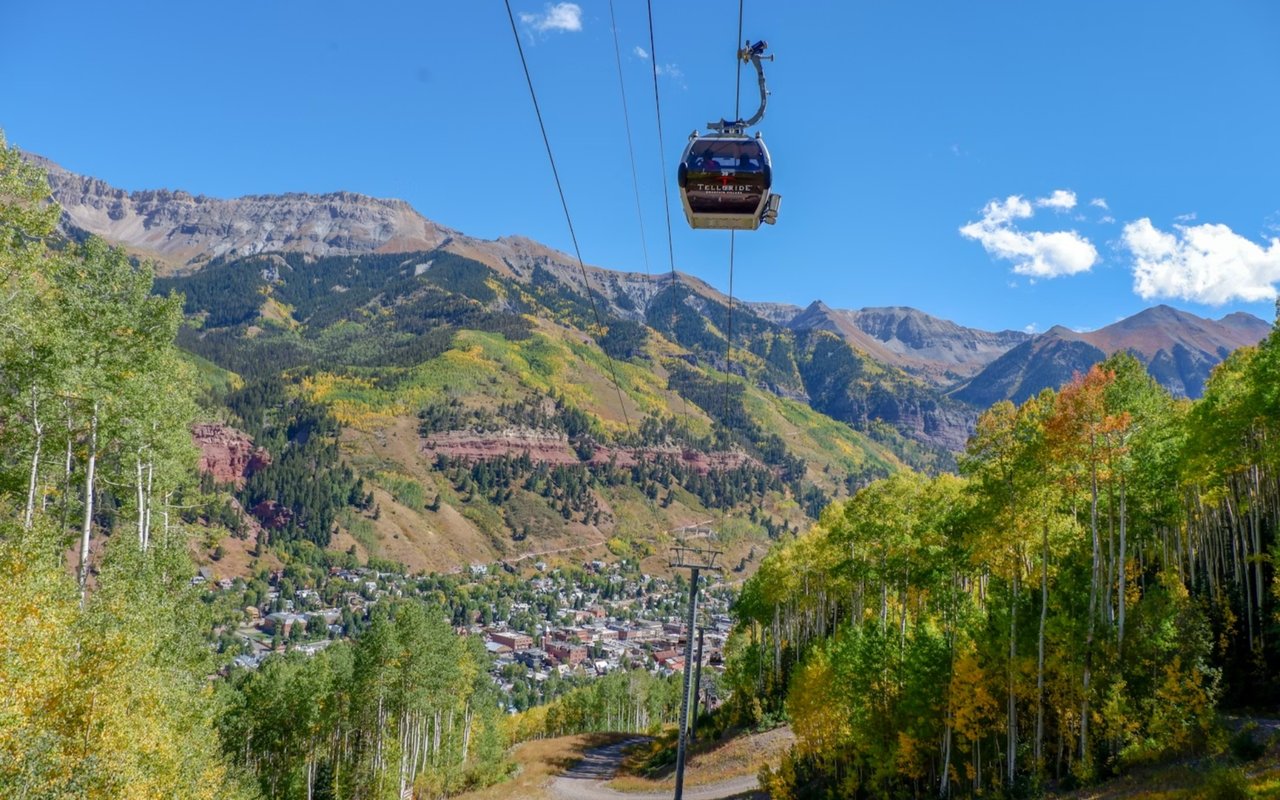
Telluride's box canyon is not just a scenic backdrop — it is the defining fact of the place. The town sits at the end of a valley carved by the San Miguel River, flanked on three sides by sheer cliff faces and 13,000-foot ridgelines. Bridal Veil Falls, Colorado's tallest free-falling waterfall at 365 feet, anchors the eastern head of the canyon and is visible from the middle of town. Bear Creek Canyon begins at the south end of South Pine Street and puts wilderness trailhead access within walking distance of every downtown block.
This geography is also why Telluride's character has remained so intact. There is no sprawl. The historic downtown — eight blocks wide and twelve blocks long — is bounded by terrain that has kept big-box development out and preserved the scale of a genuine mountain town. The same cliffs that make the skiing exceptional are the ones that protect the community from the kind of growth that has softened the character of other Colorado resorts.
The History Is Real, Not Reconstructed
Telluride was founded in 1878 as a silver and gold mining camp, originally called Columbia, and renamed Telluride in 1887 after the tellurium-bearing ores that brought prospectors to the San Juans. By the early 1900s the town had a population approaching 5,000, its own electric grid — powered by one of the first large-scale commercial AC systems in North America, developed here in 1891 by L.L. Nunn using Tesla's alternating current technology — and a frontier culture that attracted everyone from labor organizers to Butch Cassidy, who robbed his first bank on Colorado Avenue in 1889.
The mining era eventually wound down, and by the 1960s Telluride's population had fallen to the hundreds. What saved it was skiing. The resort opened in 1972, bringing a new generation to a town with genuine bones — Victorian storefronts, clapboard saloons, and an intact historic streetscape that earned National Historic Landmark District designation in 1964. The result is a ski town that doesn't feel like a ski town. It feels like a place that was already something before the lifts arrived.
The Festival Culture Is in a League of Its Own
Telluride has built a summer identity that is as strong as its winter one, and the festival calendar is a big part of why. The Telluride Bluegrass Festival, now in its fifth decade, draws over 10,000 "Festivarians" to Town Park each June for four days of acoustic music against the backdrop of the box canyon. The Telluride Film Festival, held each Labor Day weekend since 1973, is considered one of the top film festivals in the world — notable for keeping its program secret until attendees arrive, which generates a level of genuine cinematic discovery that no other festival replicates. Mountainfilm, Blues & Brews, the Jazz Festival, the Balloon Festival, and more than a dozen other events fill the calendar from late May through September.
For residents, these festivals are not just tourism — they are the social fabric. Town Park, a 36-acre community space at the east end of Colorado Avenue, is where most of them happen, and it doubles the rest of the year as a pool, an ice rink, an athletic complex, and a Nordic trail system. The park is genuinely used by the people who live here.
The Community Is Fiercely Independent
Every shop, restaurant, and hotel on Colorado Avenue is independently owned. There is no franchise strip, no chain hotel, no big-box anchor. That's not an accident — it reflects the values of the people who chose to make their lives here. Telluride has long attracted a specific kind of person: someone who could live anywhere and chose a box canyon at 9,000 feet because the trade-offs are worth it. The result is a community with a collective personality — curious, outdoors-oriented, creative, and deeply attached to place.
The gondola connecting Telluride to Mountain Village runs until midnight and is free to ride. The local newspaper, the Telluride Daily Planet, is still in print. The arts scene, anchored by the Sheridan Opera House and galleries along Colorado Avenue, is active year-round. These are markers of a town with a real civic life.
The Outdoor Access Is Unmatched
Within the canyon itself, the trailhead for Bear Creek Preserve is at the end of South Pine Street — a two-mile route to a waterfall inside a 325-acre protected canyon that feels entirely removed from town. The Valley Floor, a 570-acre conservation easement along the San Miguel River between Telluride and Mountain Village, offers flat, accessible walking and biking trails with views of the canyon walls above. Bridal Veil Falls is reachable by foot from downtown in under two miles. The ski resort's 2,000-plus acres of terrain, accessed by gondola from downtown or from Mountain Village, sits above the treeline in some of the most dramatic alpine terrain in Colorado.
In summer, the activity options expand further: fly fishing on the San Miguel, mountain biking on the trail network above Mountain Village, paragliding off the ridge, 14er approaches from surrounding trailheads, and river access throughout the valley. The outdoor programming here is not a selling point added to attract tourists. It is why the people who live here are here.
Frequently Asked Questions About What Makes Telluride Special
How is Telluride different from other Colorado ski towns?
The combination of box canyon geography, authentic mining-era architecture, a fiercely independent commercial culture, and a summer festival calendar of genuine national significance sets Telluride apart. It is one of the few resort towns in Colorado where the character of the place predates the ski industry and has remained intact through it.
Is Telluride good for year-round living, or mainly a ski destination?
It is very much a year-round community. The summer and fall seasons rival winter for activity and atmosphere, and the resident community — roughly 2,600 permanent residents — is active all year. The festival calendar, outdoor access, and restaurant and arts scene are strongest from late May through September.
What is the gondola, and why is it significant?
The free gondola connects the historic town of Telluride to Mountain Village, running daily and until midnight on most nights. It links two distinct communities — the Victorian mining town on the valley floor and the modern resort village above — into a single, walkable experience. For residents, it's practical transportation. For visitors, it's one of the more memorable ways to experience the canyon.
What should someone understand about Telluride real estate before buying here?
The box canyon is finite. There is no room to build outward, which means supply is structurally constrained. The combination of limited inventory, genuine community character, and year-round demand from buyers who could live anywhere has supported Telluride's property values over time in ways that pure ski-destination markets often don't match.
Find Your Place in Telluride With JW Group
We have worked in this market for decades, and our love for Telluride goes well beyond the transaction. Whether you're exploring a first purchase, looking to upsize within the canyon, or considering Mountain Village alongside Town, we know the inventory, the context, and the community.
Reach out to us —
learn more about our work in Telluride and let's start a conversation.