By JW Group
We send a lot of clients and visitors up to Bridal Veil Falls, and it's easy to see why once you're standing at the base of it. It's the kind of landmark that shows up in real estate conversations here almost as often as it shows up in vacation photos. Here's what we think is worth knowing about the falls, and a few other waterfalls in the area worth chasing too.
Key Takeaways
- Bridal Veil Falls is Colorado's tallest free-falling waterfall at 365 feet
- A historic 1907 power plant sits at the top of the falls, visible from town
- The hike to the base is easy, but continuing to the top is a different undertaking
- Winter turns the falls into a real hazard zone, not just a scenic ice formation
Bridal Veil Falls: Colorado's Tallest Free-Falling Waterfall
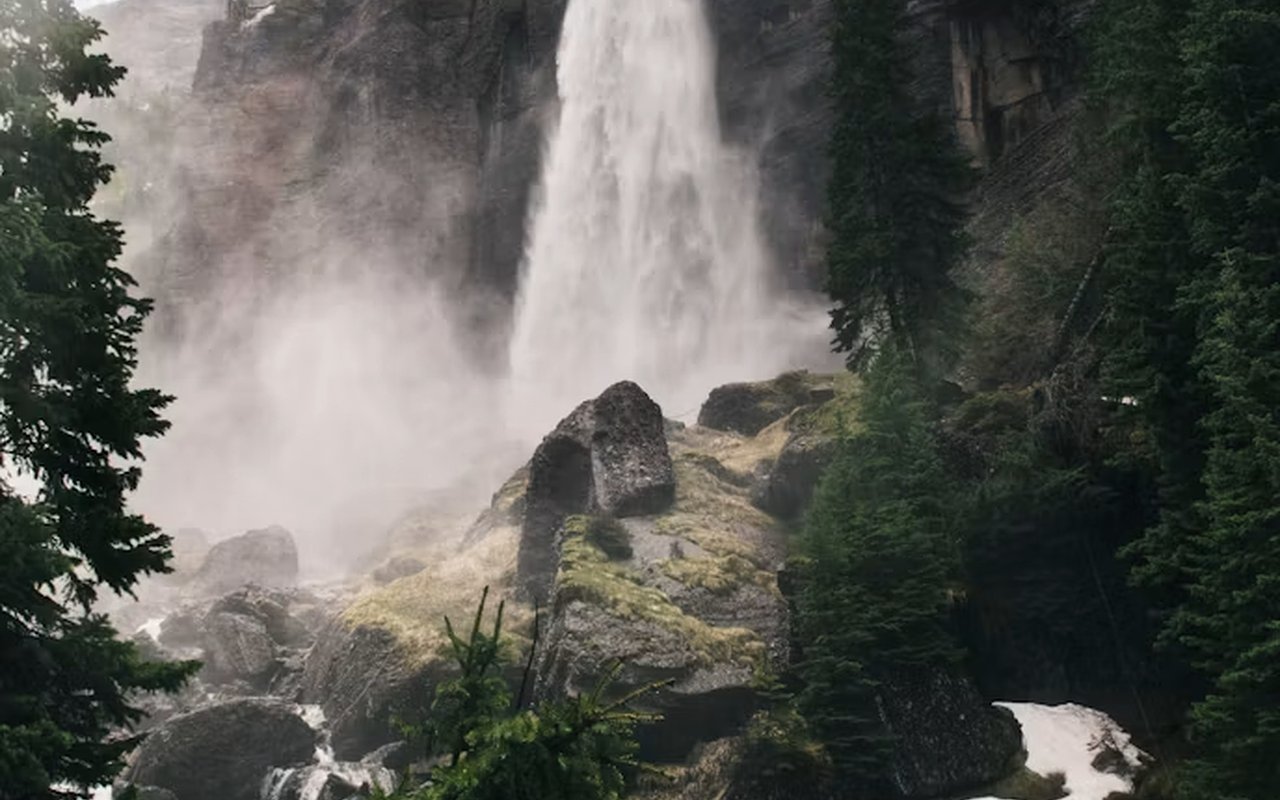
Bridal Veil Falls drops 365 feet at the end of Telluride's box canyon, making it the tallest free-falling waterfall in the state. It's actually a two-pronged waterfall, fed by Bridal Veil Creek, which drains a basin above 10,000 feet before joining the San Miguel River. The falls are visible from much of downtown Telluride, which is part of why they've become such a defining image of the town.
What Makes These Falls Notable
- Colorado's tallest free-falling waterfall, at 365 feet
- A two-pronged waterfall fed by Bridal Veil Creek
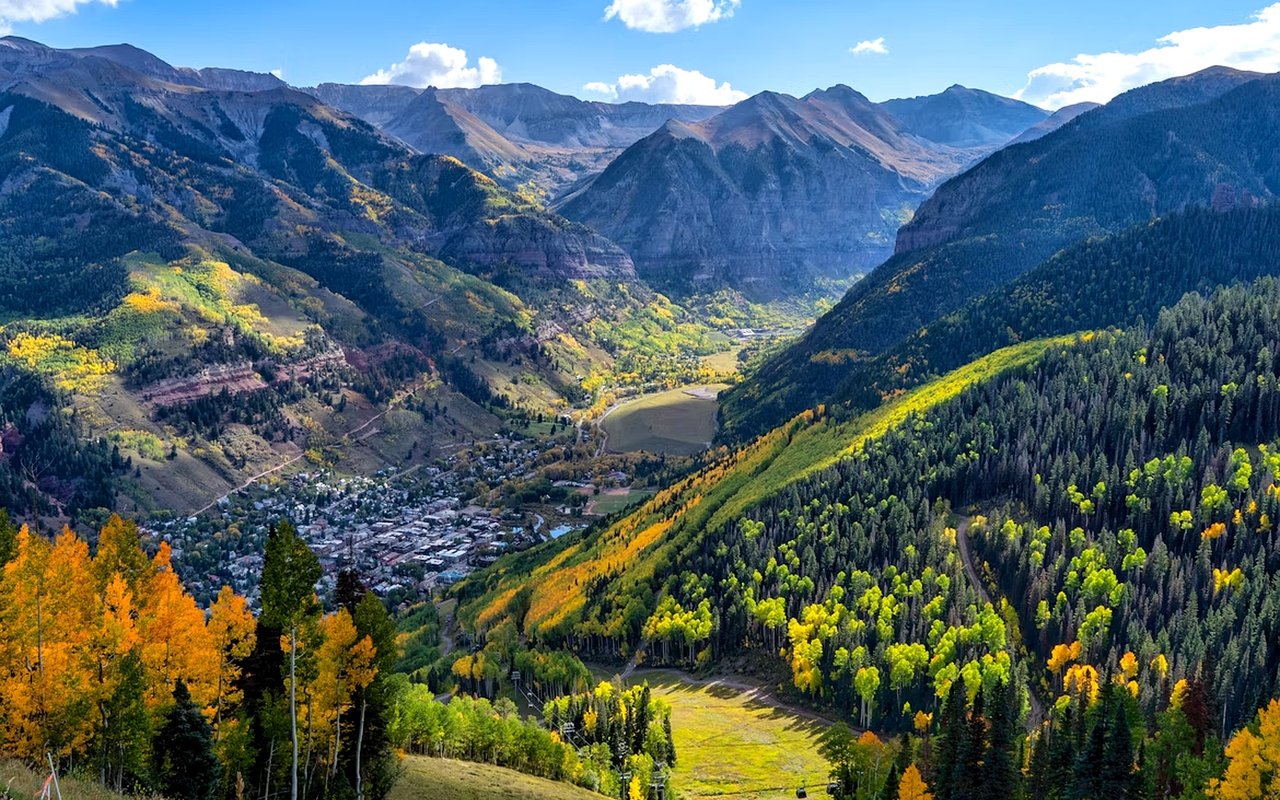
- Visible from much of downtown Telluride
- Water eventually joins the San Miguel River, which flows through town
The Historic Power Plant at the Top
A hydroelectric power plant sits at the top of Bridal Veil Falls, built in 1907 to supply the Smuggler-Union Mining Company and now listed on the National Register of Historic Places. It's one of the oldest surviving structures of its kind and remains a visually striking part of the falls, perched right at the cliff edge above the water. The plant is privately owned, so it isn't open to visitors, but it's a real part of what makes this landmark historically significant beyond just its height.
Why This Structure Matters
- Built in 1907 to power the Smuggler-Union Mining Company
- Listed on the National Register of Historic Places
- Among the oldest surviving AC power plants of its kind
- Privately owned and not open to visitors, but visible from the trail
Hiking to the Falls and Beyond
The hike to the base of Bridal Veil Falls is relatively easy, following an old mining road along the San Miguel River for under two miles one way with gentle elevation gain, making it accessible to most casual hikers. Continuing past the base and up to the top of the falls is a different undertaking entirely, following a steep switchback road that can also be driven with a four-wheel-drive vehicle. From the top, trails continue further into Bridal Veil Basin toward Blue Lake, though that extension involves real elevation gain and is best suited to more experienced hikers.
Understanding the Different Hike Options
- An easy, under-two-mile hike to the base, suitable for most casual hikers
- A steeper switchback route to the top, walkable or drivable with 4WD
- Trails continuing beyond the falls into Bridal Veil Basin toward Blue Lake
- The extension to Blue Lake requiring real elevation gain and more experience
Winter Brings a Different Kind of Danger
In winter, Bridal Veil Falls freezes into a dramatic ice formation that draws serious ice climbers, but the area also becomes hazardous for casual visitors. Avalanche risk is real here, and controlled avalanche mitigation, including deliberate shelling, is a regular part of managing the area during winter months. Hiking or snowshoeing up toward the falls in winter is actively discouraged because of this risk, and even driving up is typically closed, with visitors instead viewing the frozen falls from the base of the canyon.
What to Know About Winter Conditions
- The falls freeze into a formation popular with experienced ice climbers
- Real avalanche risk, including controlled mitigation efforts during winter
- Hiking or snowshoeing to the top is actively discouraged in winter
- The road to the top is typically closed, with viewing limited to the canyon base
Other Waterfalls Worth Seeking Out
Bridal Veil Falls gets most of the attention, but it isn't the only waterfall worth visiting in this area. Bear Creek Falls, an easy, well-traveled trail from the south end of Pine Street in downtown Telluride, offers another rewarding hike with its own distinct character in about two miles one way. For anyone spending real time here, working a few of these lesser-known spots into a visit rounds out the experience beyond just the most famous landmark.
Worth Adding to Your List
- Bear Creek Falls, an easy, well-traveled trail from downtown Telluride's South Pine Street
- Other seasonal falls that appear throughout the surrounding basin
- Spring and early summer as the best window for peak water flow generally
- Trail conditions worth checking directly before heading out to any of them
FAQs
Is the hike to Bridal Veil Falls appropriate for kids or casual hikers?
We'd say the hike to the base is accessible for most people, including families. Continuing to the top or beyond is a bigger undertaking that we'd only recommend for more experienced hikers.
Can we drive all the way up to the falls?
We tell clients you can drive the switchback road to the top in a four-wheel-drive vehicle during the warmer months. That road is typically closed in winter, so access becomes much more limited.
Is it safe to hike up in the winter to see the frozen falls?
We wouldn't recommend it. Avalanche risk is real during winter months, and hiking or snowshoeing to the top is actively discouraged for exactly that reason.
Contact JW Group Today
Landmarks like Bridal Veil Falls are part of what makes this town feel like home to so many of our clients, and we love sharing that with anyone considering a move here. We're happy to talk through what makes this community special beyond the real estate itself.
Reach out to
JW Group, and let's talk about life here in Telluride.